Coming Home

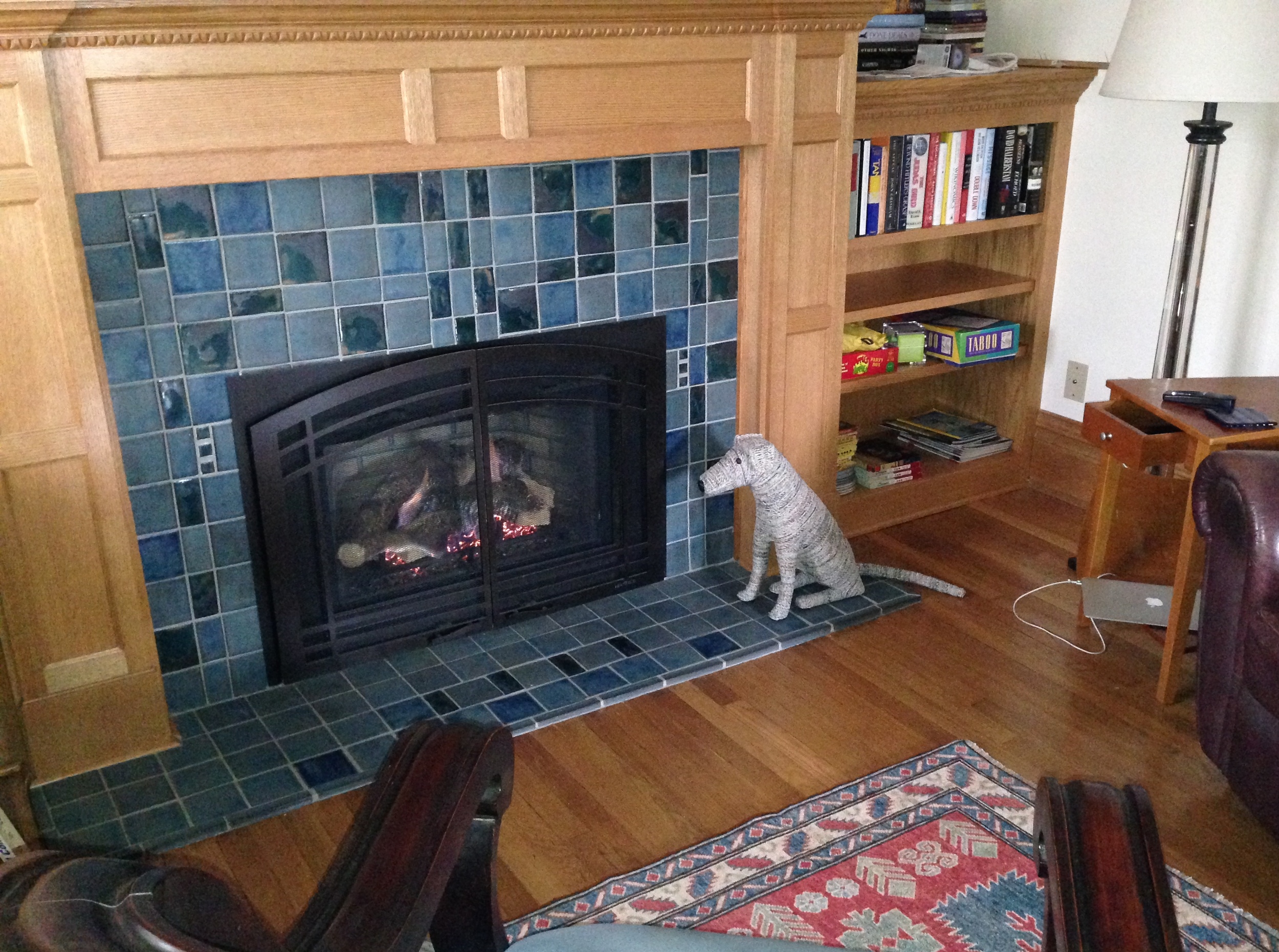
Fireplaces really do matter in Minneapolis! 

Fireplaces really do matter in Minneapolis! 

I started writing this after the first good night’s sleep back in our house in Minneapolis while the cross-country drive was fresh on our minds and the familiarity of home felt like a warm embrace.

It was warm that week – the kind of warm that made one believe true spring had actually arrived early this year. With the first gasp of weather in the 60s and even 70s, Minnesotans were out in force and in shorts running around the lakes and biking the trails.

Life has intervened in the past month – boxes have intervened – and since then I’ve experienced the ups and downs of spring in the land of the north coast. Blustery winds that chatter teeth then produce overcast skies – day after day – and actually lead to rain. 

And so the initial glow of return has become more like life itself. A lot of hard work resulting in satisfying outcomes mixed with intermittent flashes of joy at reunions with old friends and family

Ah yes – we are home.

When I was a kid, home was the house where my mother and father lived and the town where I grew up.  It was Mansfield, Ohio.

That sense of “home” continued through college in North Carolina and persisted through life in four cities, three states, marriage, and children.

When we went home, it meant going to my childhood home in Mansfield.

But the magnetic pull of “home” that brought us back from a happy adventure in California was not the pull of Ohio. It was from the city where we have built the bulk of our adult relationships. Home is where we raised our children within a supportive and expansive village of help and care.  Home for us is no longer defined by the location of our extended family, as our relatives are spread across the country and around the globe – some in places we will never again return to visit.

Home for us is now Minneapolis. It took that move to Southern California, the land of perpetual sunlight, warm breezes and palm trees, for me to realize what only my bones truly knew.

We came to Minnesota twenty-five years ago – newcomers by some standards. I was convinced we would only stay for a year or two because there was no reason to believe otherwise.

Instead it became a life.   

We lucked in to renting a house in Linden Hills, a sweet neighborhood tucked between two of the city’s lakes that has become a tony enclave. Although we arrived in December – a very cold December at that - we were greeted with the warmth that makes Linden Hills so very special.  It started with two little girls ringing the doorbell.

“Do you have any kids?” they asked.

At the sound of those voices, our two children ran towards the door shouting, “Yes, we’re here!” And lifelong relationships were begun.

A day or so later, there was another ring of the bell.

“Hi – since you’ve just moved in you probably know where your potato masher is,” said a warmly wrapped woman from across the street.

Indeed I did, and offered it up for her use at her holiday family gathering.

Another lifelong friendship began.

That first summer sealed our connection to the neighborhood, with children roaming between yards, always featuring a ready and watching mother on a stoop, and a weekly porch gathering to celebrate the continued health of our kids and our neighborhood. 

Within ten months, we purchased the house on the corner across the street and that has been our home ever since. But I didn’t think of it as “home” until recently.

Yes – despite the Polar-Vortex-Horror-Inducing-Winter-of-2014, we found ourselves missing the warmth of Minnesota.

Don’t get me wrong. We have made some wonderful friends in Southern California, and there are amazing cultural aspects to life in LA.  But it’s not home.

Despite access to the Pacific, we missed the lakes. We missed the well-groomed and easy public access to our natural resources in Minnesota. We missed the vibrant restaurant scene that’s remarkably adventuresome. And we missed the accessible arts community that percolates and launches great performances in music, theater, and literature.

We missed the well-earned confidence of Minnesotans in politics as the art of getting things done.  People participate in government here because – despite arguing over size and scope – governing in Minnesota is recognized as a valuable service to a higher quality of life.

Mostly, though, we missed our community of friends. We missed the easy camaraderie of those who helped us raise our children through sports at the parks and school plays and performances. We missed the friends who bring potluck hot dish at the drop of a hat whenever there’s a call to gather. We missed the deep relationships that only come through years of shared experiences – including winters – that strengthen bonds of understanding.

And so we’ve come home to Minneapolis where the faces and smiles are warmly familiar and each season has a distinctive character.

We also now know that there are warm wonderful faces waiting in California, and already have plans to run away to the sun and warmth of the left coast when its time for respite from bitter and brutal weather on the north coast. 

On and Off the Road

Road trips are the ultimate test of a relationship. A long drive for a weekend can be a quick read on how a long term relationship will work – or not. It’s hard to remember how many boyfriends fell by the wayside early on when their curiosity failed or they demonstrated an inability to riff off a provocative All Things Considered piece.

On the other hand – it was our first two-week road trip along the right coast of this country that let me know Jacques was a keeper. He noticed odd roadside spectacles, asked interesting questions, and added context to radio commentary that was hysterical.

And here we are – 32 years later crossing half of the country from the left coast to the North coast, and it’s still fun. We toddled from Los Angeles to Minneapolis with a few detours along the way and experienced spectacular vistas mixed with mind-numbing prairies and landscapes that were merely puzzling.

What was with that smoking and steaming ground in Nevada’s Great Basin?

Why did anyone choose to live here?

And why was there no wildlife visible anywhere?

That’s where Jacques began a deeper relationship with his iPhone’s Siri. Suddenly we had an authority to answer all of those questions that occur as you’re staring at miles of nothing. And the nation’s network of relay towers really stepped up to answer our questions despite a few predictable gaps in service.

The drive took me back to a cross country drive from decades before when my father joined me in Scottsbluff, Nebraska for a drive to see his brother Uncle Paul and Aunt Marge in LA. This was 1980 so smart phones – heck, even radio towers – were absent in the country.

It was during that first day of straight line flat-open-spaced driving that Dad came out with the comment that makes me laugh to this day. 

“Isn’t ear wax wonderful?” he said.

I knew I had not heard that correctly.

“Excuse me? What did you say?”

“I said isn’t ear wax wonderful?”

“Uhhh – I have no idea how to respond to that, Dad.  Are you feeling ok?”

That brought a soft chuckle from the passenger seat.

“OK. Let me explain. There’s a fly in the car, and I was just sitting here thinking of how awful it would be if that fly flew into my ear.  Just imagine. That buzz, buzz, buzzing would drive me insane.”

He was quiet a minute while I pondered the impact of a fly buzzing in my head.

“And then I remembered ear wax. If a fly flew into my ear, it would get stuck in my earwax and wouldn’t be able to drive me insane after all. So… isn’t ear wax wonderful?”

That’s when I laughed. 

“You’re an amazing human being, Dad. I’ll bet few humans have ever realized the true value of ear wax as an insanity prevention device.”

We both laughed and that ear wax comment kept us company into the mountains of Western Wyoming. 

Today I realize that we really do marry a version of our fathers. For me, it’s a tech-enabled quietly funny version who is still good company for more than 2000 miles. Jacques, his new best friend Siri, and continuous access to music made this a much easier trip than the one of 30-odd years ago.

This drive really needs a sound track and curiosity and humor.

Discombobulating Ambiguity

How will we pack that poster?

How will we pack that poster?

I’m just not convinced that there’s any amount of preparation that can lead to a smooth moving experience. There’s always that moment near the end when one more cupboard is found, filled with unusual objects having no clear place in a box and no easy way to package for shipment. And as the van pulls away, I am perplexed by a series of specific item questions.

“Did you see the lamp get packed up? How about the vacuum? And did they put the files on the van?”

Then I let it all go. The deed is done, and the vans are rolling in some version of zigzag pattern, collecting and distributing loads along the way. I know there will be an unpacking event on the other end to include the revealed surprise of mismatched items in unlikely boxes. And I know we will re-achieve our grounded status once again with paintings and posters affixed to walls, and drawers organized by function.

Now we’re in the discombobulating middle with either important or last minute items tucked into the back of the car as we check off the to-do list of sites we wanted to see while in California –nothing like a deadline to focus one’s plans.

The idea is to drive north on the Pacific Coast Highway and turn right when we hear from the movers that they are four days away. That will give us time to hightail it cross country to the thawing North Coast of the U.S. to assist in pointing out locations for the stuff that needs to be resettled.

And just as all of this seemed like a batch of overwhelming mayhem for any one life, we see the image on the front page of today’s Wall Street Journal. It shows Somalian families huddled around their remaining possessions after even their temporary shelters were destroyed by soldiers.

That puts it all in context. I can’t help feeling extremely fortunate that we have access to friendly movers, a packed up vacuum, and a place to call home far from marauding Somali soldiers. With that feeling of gratitude, the discombobulation and ambiguity float away leaving the simple desire to help the truly scattered lives of the women in the photo.

The Act of Leaving

Leaving D.C. in 1984, when we moved ourselves, and called friends for help.

Leaving D.C. in 1984, when we moved ourselves, and called friends for help.

It’s boxes again for us. Fortunately we have kept the good ones from past moves, which provides an interesting guessing game as to their first use.

“Was this from our original move to Minneapolis?” I ask Jacques, wondering how that could even be possible. That would make this particular box that I’m re-taping a 25-year-old box.

And then I find myself wondering if there’s a market for vintage moving boxes.

It’s a conditioned response from a year of scouring online vintage sites trying to understand what it is about the stuff of life that retains value from generation to generation. Why is one silver doodad more valuable than another?

I still don’t quite understand the vintage market, but I do know what I will be packing for this move.

We are packing the unusually unique, the meaningful, the art – and the kitchen - to take back with us. We are closing the book on this chapter of adventure in Pasadena and moving to Minnesota, a place with four distinct seasons, albeit one that lasts a tad too long for this woman.

It’s time to go home, however. I’ve learned that there’s a remarkable pull that comes from the place that helped us raise our children – our village, in many ways. We miss our synagogue community, the lakes, the Mississippi River, and the culture of the North Coast. I even miss the sweetly reticent kindness of our Scandinavian neighbors.

Now we’re focused on the leaving and that’s turning out to be harder than we thought it would be. We’ve grown close to a number of dear, creative, and engaging people in Southern California. It will be hard to wake in the morning with no mountains on the horizon. I will miss the predictable light from the sunshine. I will miss the LA Opera, the Hollywood Bowl, and the beaches.

Jacques likes to point out that we will be back. And he’s right. We will make a point of coming to this part of the country when the wind starts its 3-month-long howl out of Northern Siberia. We know we can return to meals with friends, explorations of canyons, and performances on Bunker Hill’s music-mecca.

I suppose in that sense it’s less of a leaving, and more of a change in our relationship with LA. We’ll become long distance friends of this part of the country rather than residents. We’ll be long-term visitors and drop-ins when projects arise. And we’ll maintain our recent friendships virtually – which we’ve learned is remarkably easy. It’s how we know what’s still going on in Minneapolis three years after leaving.

Back to the boxes…

And now, 40 years later...

Clare mastered Carol's selfie stick to grab this shot in Hollywood earlier this month.

Clare mastered Carol's selfie stick to grab this shot in Hollywood earlier this month.

The “girls” from my college freshman hall came to visit earlier this month. It had something to do with escaping the winter mayhem of the east coast for the warmth of Southern California. Whatever the excuse, we girls try to reconnect every few years or so to take stock of our lives – and this year we marked 40 years since our first meeting.

Just writing those words is shocking. There was a point in my life where the thought of even being 40 years old was unimaginable. And now it’s the number of years it has been since we pulled up to our college dorms as 18 year olds. Who knew we’d get old so fast?

Now I realize that 40 isn’t old at all…it’s about the time we start getting the knack of things, gathering experience and knowledge that is actually of value.

This year my daughter joined us. She lives here, knows all the best restaurants, and although she arrived much after college, she fit right in. It was her perspective that made me reflect on the importance of these women in my life.

“Mom,” she said. “Your college friends are really different than your other friends.”

Curious, I asked, “In what way?”

“Well, they believe different things. They’re not all Democrats, or the same religion, and some work from home and others have jobs,” she noted. “And most of your other friends are more like you.”

She’s right. And that’s when I realized how much is lost when accidents of forced geography stop determining those we meet and get to know.

As kids, we grew up in neighborhoods our parents chose. They were filled with kids who were different than we were. There was the fun girl through the backyards always seeking adventure; the kids with the pool whose grandparents lived next door to watch us; the kids with new bikes, old bikes, and no bikes. That diversity of circumstance, belief, and economics taught us tolerance. We were shushed when we were too loud, told to be kind to the kids with few toys, and always learned to be respectful of people we didn’t always agree with – the credo of the 1960s in our Ohio hometown.

The same was true as freshmen in college when some invisible force - or the residence hall committee – determined where we would be living. There was little ethnic or racial diversity in our dorm, but wide difference in every other way.  We were Southern belles, damn Yankees, from huge cities, and tiny hamlets with parents both liberal and conservative leading to both laid back and high maintenance children.  Some serious jocks mixed with dedicated sedentary sorts, poets, scientists, math majors, and “undecideds” comparing curriculum and schedules during all night studying. And we generally got along by being respectful, tolerating differences, and working to hear and understand each other.

Today the people I spend the most time with are a pretty homogenous bunch. We generally agree on politics and perspectives on life.

And that’s what my daughter noticed when the college girls came to visit – my old friends have opinions, strongly held, well-articulated opinions.  And we violate all of the polite rules of etiquette when we get together. We discuss politics, sex, and religion – always with underlying respect and genuine interest in understanding. 

I need to exercise those diversity muscles more often than one weekend every year or so – I’m thinking it’s time to broaden the invitations to our dinner table to ensure we get to listen and hear diverse opinions to broaden our life perspective. Life moves too fast and is too short to get narrow in the way we view the world, don’t you think?

Molly's Dollies

A few years out of college, some of our freshman friends - Annie, me, Lauren, Laura, and Carol - attending each other's celebrations and weddings.

A few years out of college, some of our freshman friends - Annie, me, Lauren, Laura, and Carol - attending each other's celebrations and weddings.

I remember being so very nervous as we walked into the dormitory with the first of several loads of suitcases and bags. My parents were with me so I felt it important to appear confident. I wasn’t really.

This was it. I was to meet the girl who would be my freshman hall roommate for the first time and, as I had heard from others who were older and wiser, this would determine the success of my entire college career.

We had written letters to each other over the summer, once our names were shared by Wake Forest. This was so very long ago that there was no Internet, that we knew of anyway, and cellphones were still science fiction. And somehow, using only the tools of the time we had arranged for one telephone call to check on room furnishings.

Her voice had a strong Southern accent that was both foreign and comforting to my Ohio-bred ears, and we talked about the important things of dorm life, like who would bring the stereo and whether we would buy a hot pot, even though they were discouraged on campus.

So here we were, ready to meet face-to-face for the first time, and instead my R.A., Molly Lambright greeted us at the top of the Bostwick Dormitory stairs and waylaid my mom and me.

“Well hello,” she said as she reached for a bag with a smile. “Welcome to Bostwick 2B. Let me help you find your room.”

And with that I relaxed as the diminutive blond bundle of energy smiled and guided us forward.

It turned out that my Freshman roommate did not determine my path through college. Others on my hall did.

In the days before I recognized such things, my roommate was a solid introvert who thought lounging in the room playing songs on the guitar was the way to get through school. As a raging extrovert, I engaged in the type of activities that made her want to poke her eyes out. So my mates through college and now life were others from the 2B – and 2A - hall.

Forty years later I know now how important Bostwick 2B and Molly were to supporting our launch into young adulthood. She was the cheerleader to those who needed the boost. She listened with no judgment to those who questioned their actions from the night before. And she gave us an identity as Molly’s Dollies that we still carry into our not-so-young next chapters…

Thanks, Molly, for the support then – and for staying connected to us now.

The Sacrament of Putter

Puttering at sunset in Poipu Beach, by Avi Nahum.

Puttering at sunset in Poipu Beach, by Avi Nahum.

I believe puttering is the human way to work through or manage the complexities of life. It may appear on the surface that puttering is just a mindless movement from one task to the next  with little in the way of planned outcome from the effort. But ahhh, that’s just on the surface. Even my brilliant scientist friends tell me that their greatest Aha! Moments occur when they’re thinking about something else.

For me, if there’s no puttering time in a week, everything falls apart. My ability to center on what’s truly important can’t be achieved without a certain amount of seemingly mindless wandering.

Maybe last week’s example will help explain. It started with a load of laundry – those annoying fragile items that can only withstand the “hand wash” cycle on the machine. As I carefully turned shirts inside out, and clasped the hooks on the bras, I noticed a bauble that needed to be re-stitched to its fabric, and so I pulled it out of the load for extra attention. With the washing machine starting its work, I went to find one of those little needle and thread packets from nice hotels that I stow away over the years precisely so I can stitch on baubles.

And there, in the drawer with the odds and ends, I noticed that the nail polish I bought because it was just the perfect California color has leaked a bit making smudge marks that are sticky on the drawer bottom.

“Rats!” I thought. “I should scrape that out while I see it.”

So it was off to find That Knife, the one that always scrapes up just right, and when the polish was gone leaving only a bit of color behind, I grabbed the needle and thread packet, repaired the bauble and just in time, I threw the shirt back in to the last rinse cycle of the laundry.

To be safe, I added nail polish to the always-present shopping list, and as I looked at the items on the list I noticed that by just buying some butternut squash, chicken breasts, and an onion, I could make that great Caribbean Chicken Stew everyone likes. And wouldn’t it be fun to see some old friends again? And if I made the stew, I could invite some friends over and make it a dinner party.

And there you have it – creating a much-needed evening of friendly community as the result of a laundry repair task. 

The writer Anne Lamott, a wise literate soul and observer of humans, elevated the act of puttering by calling it the sacrament of putter in one of her essays.  She said she puts the coffee on in the morning and engages in the sacrament of putter while it brews. 

I think she's right. Taking care of the little things - letting the mind wander with your body as you complete small tasks, put things aright, and create order in your space - is a sacred pursuit that can free the soul for more elevated pursuits. Like finding the cure for Alzheimer's.


Learning Joy from Survivors

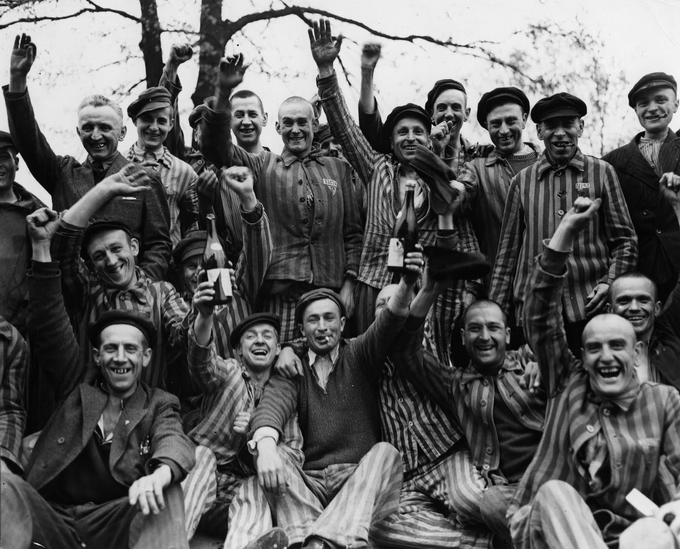
Liberation of Buchenwald, 1945, by Margaret Bourke-White.

It has been twenty years since I first got the call asking if I would try out to be an interviewer for Steven Spielberg’s Survivors of the Shoah project. 

I wasn’t sure I could do it. I wasn’t sure I was strong enough to listen to stories of human beings who witnessed and then survived pure human evil. Would I be able to hear survivors tell of torture and death without crying? Would I then be able to ask the follow-up questions to elicit memories long repressed that could contribute to the testimony of that era that even then was fading into history?

The only way to know for certain was to try. So I joined a group of Minnesotans that traveled to Chicago where Foundation leaders observed us as part of their selection process. We interviewed each other, then met with volunteers who had experienced death camps and ghettos. The task was to ask questions, listen, and then ask the next question while being observed.

The first to be dismissed were those experts on the Holocaust who argued with the memories of survivors.

“Oh no, that couldn’t have happened as you described it,” said one expert. “I know because I have studied that history.”

The testimonies, the memories, the remembered experiences of those who actually lived through human evil were never to be discounted or “corrected”. Memories, as imperfect as they can be, are just that. And with 50,000-some collected, there’s strong credibility built from the repeated memories of experience that garners the truth.

It turned out that my background as a TV journalist had taught me what I needed to know to serve as an interviewer. It gave me the curiosity license to ask questions, follow up to get clarity, and ultimately support nearly 30 testimonies overall from survivors and a few liberators.

I learned about the strength of the human spirit to withstand deeply damaging horror and persist to live with joy in spite of that, or even because of it. Each of those I met had lived a life of meaning and purpose, excelling through education, business pursuits, by building families and civic institutions as if to say, “See! We still matter after all.”

As one survivor said to me, “They took my mother, they took my father and my little brother, but I’m still here. And since I’m here, I’m going to live life with purpose and on purpose.”

This week’s 70th anniversary of the liberation of the death camp at Auschwitz coming as it does amidst international news of continued events of pure human evil is a reminder that we need to remember what humans are capable of being to avoid repeating those same evils because, indeed, each life matters. 

Note: Today testimonies from survivors can be found at the University of Southern California’s Shoah Foundation.  https://sfi.usc.edu/